




Chevrolet Tires
Firestone Special Offers
Firestone Special Offers provide customers with great deals on tire purchases, vehicle maintenance, and repairs. From discounts on select tire brands to limited-time promotions on services like oil changes and brake checks, Firestone ensures you get high-quality products and expert service at a competitive price. Be sure to check their latest offers and take advantage of savings to keep your vehicle running smoothly.
Quality Tires near Rapid City, SD
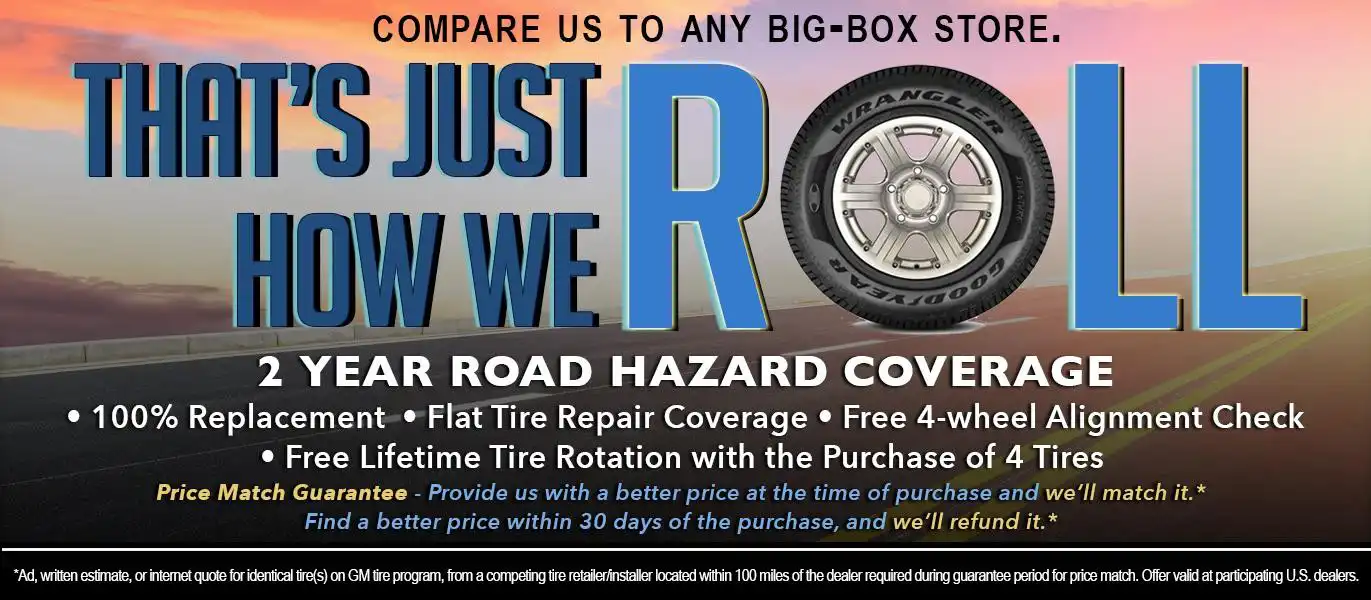
Whether you need a quick tire repair or a full-on replacement, our Certified Service experts at Denny Menholt Auto Group have got you covered. Tires aren’t something to skimp on, especially with the kind of winters we get around here.
And here’s the kicker: we have a price match guarantee and some of the best two-year road hazard coverage around. That means 100% tire replacement, flat tire repair, no-cost 4-wheel alignment check, and lifetime tire rotations—all at no extra cost. Best prices, best selection—year-round. Seriously, that’s just how we roll at Denny Menholt Auto Group in Rapid City. Let’s make sure you’re ready to handle whatever winter throws your way!
Maintaining Your Tires
Tire Tech Tips From Denny Menholt
Denny Menholt Rapid Chevrolet helps to keep you rolling. That's why we offer Tire Tech Tip videos where we cover topics like alignment, tread depth, tire types and more. So you can keep rolling safely and comfortably with peace of mind in tact!
When it comes to tires, Denny Menholt Auto Group has a price match guarantee and the best two-year road hazard coverage around. 100% tire replacement, flat tire repair, no-cost 4-wheel alignment check, and no-cost lifetime tire rotations. Best prices and selection year-round! That's just how we roll at Denny Menholt Auto Group in Rapid City.
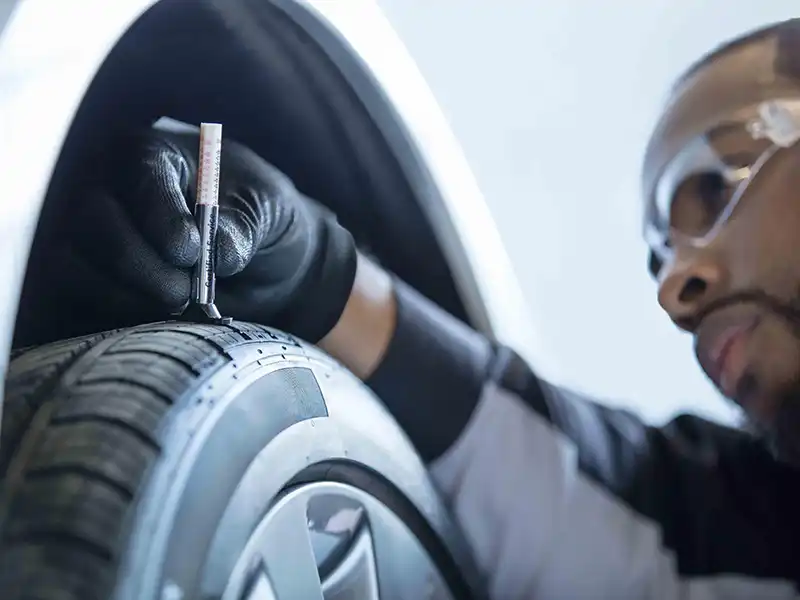
Measuring Tread Depth
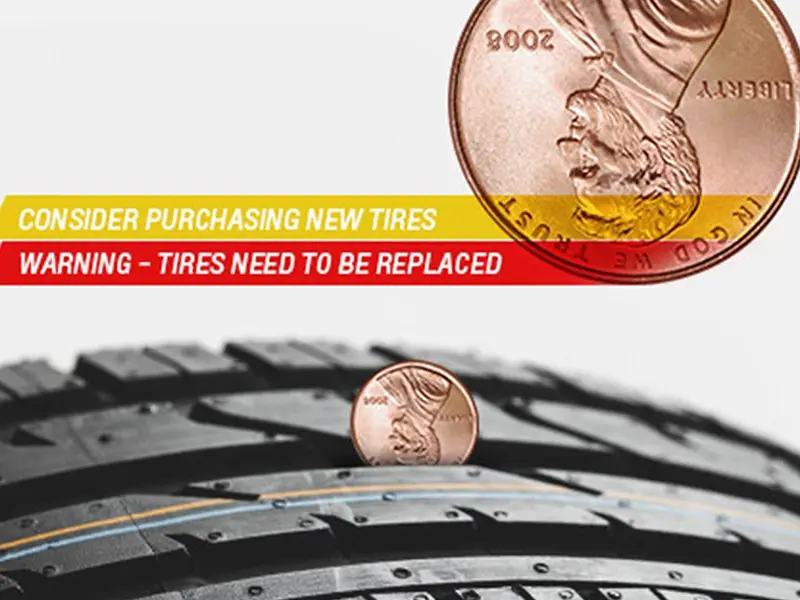
A quick and easy way to check your tire wear is with a tread-depth gauge. These tools come in either digital or mechanical versions. The easiest way to check wear on your tire is with a penny. Place a penny upside down in between the tire tread as shown on the right. If you can see the top of Lincoln’s head, the treads are worn and tire replacement is needed.
When To Replace Tires
Tread wear indicators appear when the tires only have 2/32” or less of tread remaining. Rubber in tires ages over time. Other warning signs include:
- You can see three or more tread wear indicators around the tire
- The tire cord or fabric is showing through the rubber
- The tire tread or sidewall is cracked, cut, or snagged deep enough to show cord or fabric
- The tire has a bulge or split
- The tire has a puncture, cut, or other damage that can’t be repaired correctly
Wheel Alignment
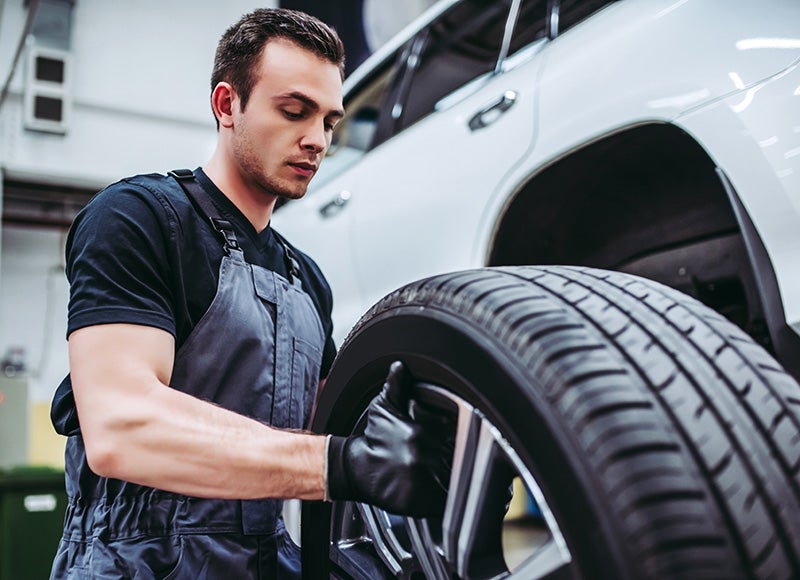
Proper wheel alignment is key to prolonging the life of your tires. If your vehicle is misaligned, it can cause your tires to wear unevenly, and you may experience handling problems such as pulling or abnormal vibration.
Consider a wheel alignment check if there is unusual tire wear or the vehicle is significantly pulling to one side or the other. A tire that is out of balance often affects ride quality and can shorten the life of tires, bearings, shocks, and other suspension components. If the vehicle is vibrating when driving on a smooth road, the tires and wheels may need to be rebalanced.
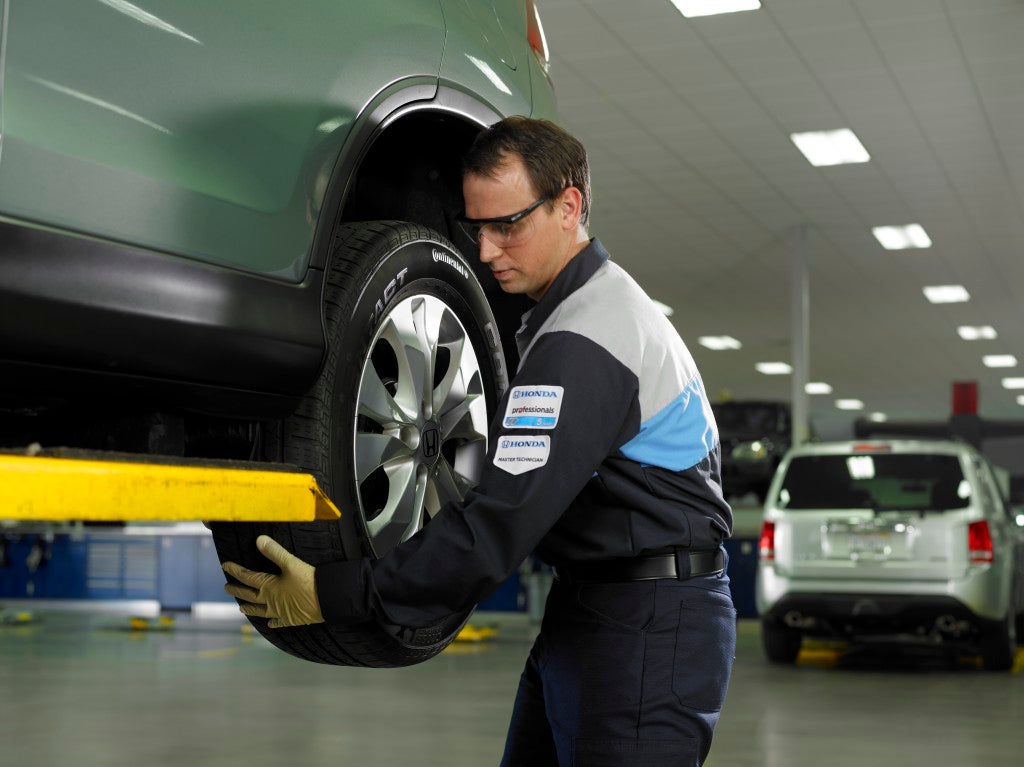
Tire Rotations
It’s a known fact that regular tire rotation extends the life of your tires and improves performance. Tires are rotated to achieve a uniform wear for all tires. Each tire performs different tasks (such as steering in front- versus rear-wheel drive), therefore tires wear at different rates. Tires should be rotated every 7,500 miles to prevent irregular tire wear.
It’s important to rotate your tires according to the correct tire-rotation pattern. Doing so will prolong the life of your tires and will reduce the risk of sudden tire failure. Front tires encounter different tasks than the rear tires. A front-wheel-drive car's tires perform different tasks than those on a rear-wheel-drive vehicle.
Tire Pressure
Check your tires at least once a month when the tires are cold, meaning the vehicle has not been driven for at least three hours or no more than 1 mile. The Tire Information Label located on the inside of your doorframe has the recommended cold tire pressure for your vehicle.
Inflation pressure maintenance of tires is critical for overall tire and vehicle performance. Maintaining the correct inflation pressure allows the tire to perform as intended, including for comfort, fuel economy, stopping distance, cornering, traction, tread wear, and noise.
Tire Pressure Monitoring System
The Tire Pressure Monitoring System is designed to warn the driver when low-tire-pressure conditions exist. A sensor measures tire pressure and temperature, then transmits data to the tire-pressure monitor. If the pressure in one or more of your tires is 25 percent or more below the vehicle manufacturer's recommended cold inflation pressure for tires, a warning indication will alert the driver.
Your Original Equipment TPMS sensor battery can last up to 10 years with normal use. When the TPMS battery fails, the sensor will need to be replaced.
If the Tire Pressure Monitor light appears as a blinking yellow lamp for more than one minute and stays solid, then diagnostic service is needed. If your TPMS is not functioning properly, it cannot detect or signal a low-tire condition.
If the Tire Pressure Monitor light comes on and stays solid with a check tire pressure, low tire pressure, or add air to tire message, then check and adjust all tire air pressures to the recommended levels. Next, drive the vehicle to turn the light off.